
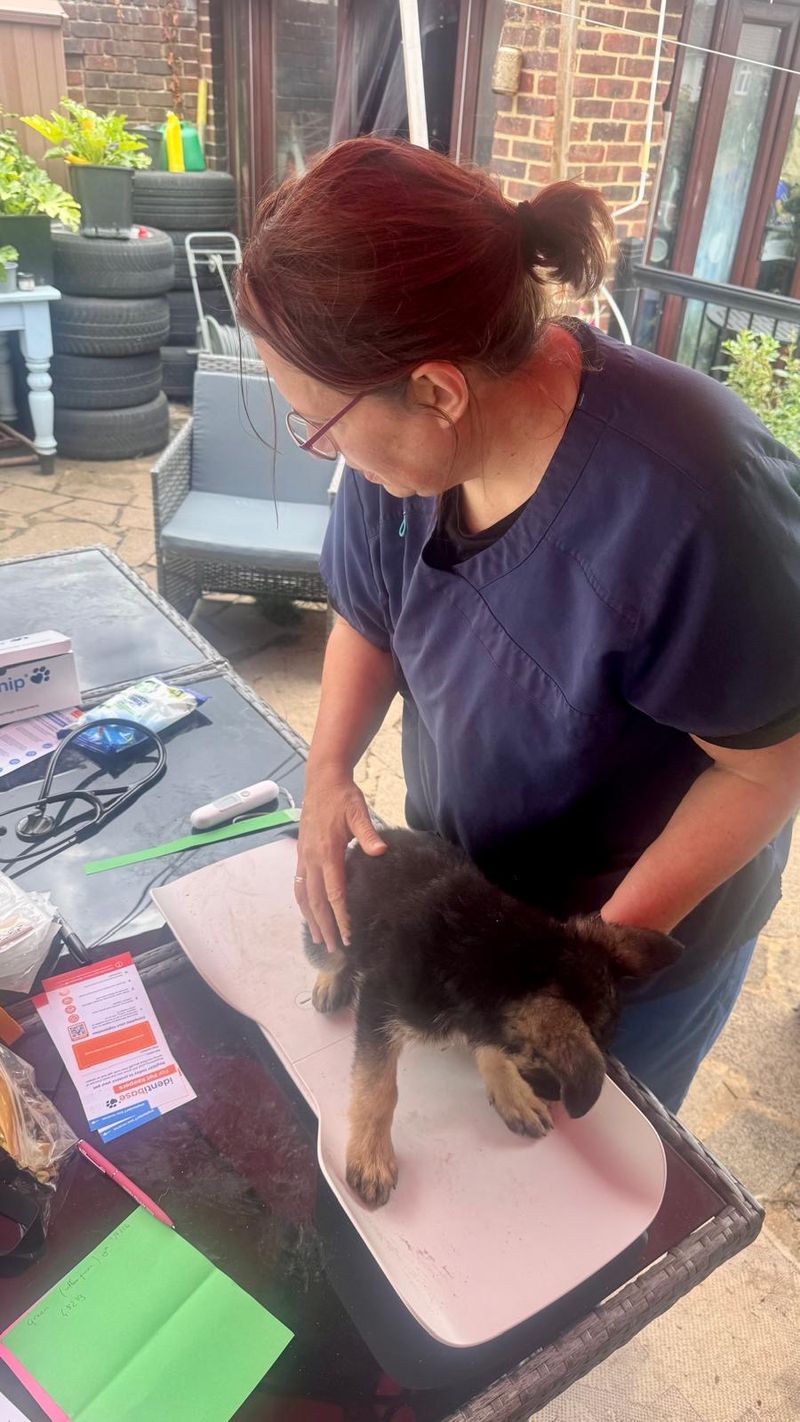
Yesterday's home visit was one of those days that reminds me exactly why I love this job. I spent the afternoon microchipping a litter of eight puppies — eight wriggling, curious, occasionally sleepy little bundles who, by the end of the visit, each had a permanent, tamper-proof way of finding their way home if they were ever lost.
Watching a litter like that go from "just puppies" to "officially chipped and protected" in one sitting is genuinely satisfying. But it also got me thinking about a part of microchipping that doesn't get talked about nearly enough: the chip is only half the story.
A Microchip Is Only as Good as the Information Behind It
A microchip itself is a tiny, passive device — about the size of a grain of rice — inserted just under the skin, usually between the shoulder blades. It doesn't track location, it doesn't have a battery, and it doesn't do anything on its own. What it does do is store a unique ID number that, when scanned, links back to a database entry containing the owner's contact details.
That's the crucial bit: the chip is just a key. The database entry is the lock it opens.
If a dog goes missing and ends up at a vet clinic, shelter, or with a local warden, the scanner will pull up that ID number in seconds. But if the contact details attached to it are old — a disconnected phone number, an email you don't check anymore, an address you moved out of two years ago — that "instant reunion" turns into a dead end. The technology works perfectly. The outcome still fails.
Why This Matters So Much for a Litter Like Yesterday's
New puppy owners are often mid-transition when they get their pups chipped: they might have just moved, switched numbers, or registered the chip in a hurry before appointments and puppy classes took over their calendar. It's completely understandable — but it's also exactly the kind of moment where details slip through the cracks and never get updated later.
With eight puppies going to (presumably) eight different homes, that's eight separate records that need to be accurate, and eight separate families who need to remember to update them — not just now, but every time something changes.
A Few Moments That Should Always Trigger an Update
- Moving house — even locally, even "just down the road"
- Changing your phone number, including swapping to a new mobile provider
- Changing your email address
- Rehoming the dog, even to a trusted friend or family member
- The puppy growing into an adult dog who's now off-lead and more likely to wander further before you notice
None of these updates take more than a few minutes, but each one can be the difference between a happy reunion within hours and a much longer, more stressful search.
A Simple Habit Worth Building
My advice to every new puppy owner I chip is the same: treat your microchip registration like you'd treat updating your address with your bank. It's not a one-time task you tick off and forget — it's a living record that needs to move with you.
A good rule of thumb is to check your details once a year, perhaps around your dog's birthday or their annual vet check-up. It's a small, five-minute habit that keeps that tiny chip doing its job properly for the entire life of the dog.
The Real Takeaway From Yesterday
Eight puppies microchipped in one afternoon is a lot of new beginnings in one go. But the job isn't really finished the moment the chip goes in — it's finished when the owner's details are confirmed, accurate, and kept that way going forward.
At Soultails, we take every part of that process seriously, not just the paperwork afterwards. We always use the right size of microchip for the size and age of the pet, so it's a comfortable, appropriate fit rather than a one-size-fits-all approach. We register every chip with Identibase, a reliable database that can be accessed 24/7, so details can be checked or updated whenever they're needed, day or night. And when it comes to scanning, we use a scanner that operates silently, so pets aren't startled or stressed by unnecessary noise during a routine check.
So if you've had a pet microchipped — whether last week or five years ago — take two minutes today to log in and double-check your details are current. It might just be the most useful two minutes you spend all week.
Have a question about your pet?
Dr. Claudia offers remote consultations across the UK and home visits in South East London and parts of Kent.
Book a consultation